
Yes, Medicare covers bed rails through Medicare Advantage plans. Most plans cover them under either the Home Safety benefit or the DME (Durable Medical Equipment) benefit, depending on how your plan is structured. Under the Home Safety benefit, no prescription is usually required. Under the DME benefit, your doctor writes an order stating that bed rails are medically necessary. Either path can result in coverage at little or no cost to you.
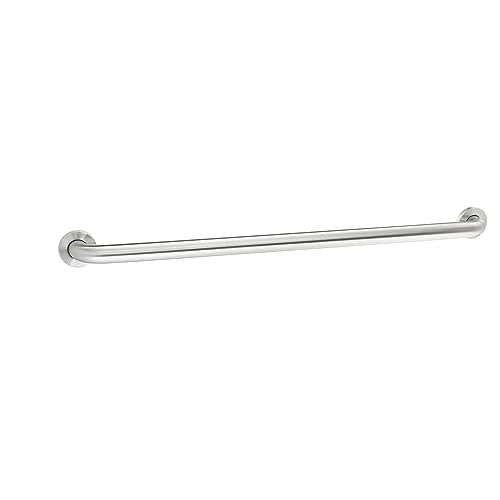
Amazon Basics 36" Grab Bar
$25-45 · Commonly covered under Home Safety benefit
What Are Bed Rails?
Bed rails, also called bed grab rails, bed assist rails, or half rails, are safety devices that attach to the bed frame or slide under the mattress. They give a person something to grip when getting in and out of bed, and they provide a physical barrier to help prevent rolling out of bed during the night.
The most commonly covered type is a half rail or adjustable bed handle. These attach to one side of the bed and extend from the middle of the mattress to the edge, giving the user a sturdy handhold. Full-length rails that run the entire length of the bed are less frequently covered because they are classified differently and carry different safety considerations.
Who Benefits Most from Bed Rails?
Bed rails are most commonly used in these situations:
- Recovery from surgery: After hip replacement, knee replacement, or back surgery, getting in and out of bed is one of the most physically demanding tasks of the day. A bed rail gives you something firm to push or pull against.
- Fall prevention for people with dementia: Cognitive changes can make a person less aware of the edge of the bed during sleep. A rail provides a physical reminder and barrier.
- General mobility limitations: Arthritis, muscle weakness, or neurological conditions can make the simple act of sitting up from a lying position very difficult. A bed rail transfers the effort from core muscles to arm muscles, which are often stronger.
- Post-hospitalization weakness: Extended hospital stays cause muscle loss quickly. A bed rail at home helps bridge the gap while strength returns.
Two Ways Medicare Advantage Can Cover Bed Rails
Option 1: Home Safety Benefit. Many Medicare Advantage plans include an annual Home Safety or Home Modification allowance. This benefit is designed to fund modifications that reduce fall risk in the home. Bed rails, grab bars, and non-slip mats often fall under this category. The Home Safety benefit typically does not require a doctor's prescription. You call Member Services, confirm the benefit amount available to you, and request the item or a reimbursement for a purchase you already made.
Option 2: DME Benefit. If your plan does not have a Home Safety benefit, or if the cost of the rail exceeds your allowance, the DME benefit may cover the gap. Under DME coverage, your doctor documents in your chart that bed rails are medically necessary for your condition. The plan then authorizes coverage through an in-network DME supplier who delivers the rails to your home.
Full-Length Rails vs. Half Rails: What Plans Typically Cover
It is worth knowing the distinction before you call your plan. Half rails and adjustable bed handles are the most commonly covered type. They sit on one side of the bed, are easy to install, and are designed for people who need help repositioning themselves or transferring in and out of bed.
Full-length side rails, which run the full length of the bed on both sides, are less commonly covered under standard benefits. They are typically associated with hospital beds, which are a separate DME category. If your doctor has prescribed a hospital bed, full-length rails may be included as part of that benefit. If you have a standard home bed, focus your request on half rails or adjustable assist handles.
Steps to Claim Your Bed Rail Benefit
- Call the Member Services number on the back of your Medicare Advantage insurance card.
- Ask the representative two specific questions: "Does my plan have a Home Safety or Home Modification benefit?" and "Are bed rails or bed assist handles covered under my DME benefit?"
- If the Home Safety benefit applies, ask for the current benefit balance and instructions for requesting the item or submitting a reimbursement claim.
- If the DME path is required, contact your primary care doctor or the physician who treated your relevant condition. Ask them to write a brief order or letter of medical necessity for a bed rail.
- Ask your plan for a list of in-network DME suppliers. Contact one and place the order. They will handle the billing paperwork with your plan.
What to Do If Your Claim Is Denied
Denials for bed rails are not uncommon on the first attempt, particularly if the medical necessity documentation is thin. If your claim is denied, do not stop there. Request a formal appeal. Ask your doctor to provide a more detailed letter of medical necessity that explains your specific diagnosis, your fall risk, and why a bed rail is needed for your safety at home. Appeals that include a detailed physician letter are approved at a meaningful rate.
Also ask your plan whether the item might be covered under a different benefit category. Sometimes a bed rail denied under DME is approvable under a Home Safety or supplemental benefit.
Items Often Covered Alongside Bed Rails
If you are requesting a bed rail, it is worth asking about other items at the same time. Grab bars near the bed, non-slip mats, and shower safety equipment are often part of the same Home Safety allowance or can be ordered simultaneously through a DME supplier. Combining requests into one call or one order can simplify the process significantly.
Official Medicare Resources