
Gait belts, also called transfer belts, are available through many Medicare Advantage OTC (Over-the-Counter) benefit catalogs at no cost to members with a quarterly or annual OTC allowance. You will typically find them listed under mobility aids or daily living aids in your plan's catalog. If your plan does not include a gait belt in the OTC catalog, some plans cover them under the DME (Durable Medical Equipment) benefit with a doctor's order.

Transfer Belt / Gait Belt
$12-25 · Available through OTC catalog or DME benefit
What Is a Gait Belt?
A gait belt is a sturdy strap, usually made of canvas or nylon webbing, worn around the waist of a person who has difficulty walking, standing up, or transferring from one surface to another (such as from a bed to a chair). The belt gives a caregiver a safe, firm point to grip and guide the person without grabbing at their arms, shoulders, or clothing.
Gait belts are used every day in hospitals, rehabilitation facilities, nursing homes, and home care settings. Physical therapists use them routinely during gait training. Home caregivers rely on them to safely assist loved ones with transfers throughout the day. Despite being a relatively simple device, a gait belt is one of the most important injury-prevention tools in home care.
Why Gait Belts Matter for Home Caregivers
Caregiver injury is a serious and underappreciated risk. When a caregiver tries to help a loved one without a gait belt, they often grab at clothing, pull on an arm, or twist awkwardly to prevent a fall. These situations lead to back injuries, shoulder injuries, and falls for the caregiver as well as the person being assisted.
A gait belt changes the dynamic entirely. The belt gives the caregiver a stable, centered grip at waist level. This allows them to support and guide the person safely without overextending or twisting. It also gives the person being assisted more confidence, because the belt contact feels more secure than a hand on the arm.
If you are caring for a parent, spouse, or other family member at home and they have any difficulty with walking or transfers, a gait belt is one of the first tools you should have on hand.
How to Find a Gait Belt in Your OTC Catalog
The OTC benefit varies by plan, but most large Medicare Advantage carriers include gait belts or transfer belts in their catalogs. Here is how to find yours:
- Locate your OTC catalog. Most plans mail a printed catalog at the start of the year, or you can find it on your plan's member portal online. Some plans use a third-party OTC platform such as NationsOTC, InComm Benefits, or a similar service.
- Search for the right terms. Look under categories labeled "Mobility Aids," "Daily Living Aids," "Home Health," or "Personal Care." The product may be listed as "gait belt," "transfer belt," or "walking belt."
- Order through the catalog. Most OTC plans let you order online, by phone, or by mailing in an order form. Items ship directly to your home, usually at no charge.
- Check your quarterly allowance. OTC benefits are often issued quarterly rather than all at once. If your allowance refreshes every quarter, note when each new period starts so you do not miss an opportunity to use your balance.
What If My OTC Catalog Does Not Include a Gait Belt?
Not every plan's OTC catalog includes every item. If you cannot find a gait belt in your catalog, here are your next steps:
- Call Member Services. Ask directly: "Is a gait belt or transfer belt available through my OTC benefit or any other plan benefit?" Sometimes items are included under a different category name than what you searched.
- Ask about DME coverage. Some Medicare Advantage plans cover gait belts under the DME benefit when a doctor writes an order. Ask your primary care doctor or physical therapist to include a gait belt in a DME order if you are also requesting other mobility equipment.
- Consider retail cost. Gait belts are very affordable at retail, typically $12 to $25. Even if your plan does not cover one, the out-of-pocket cost is low enough that self-pay is a reasonable option given the safety benefit.
Common Situations Where a Gait Belt Is Needed
A gait belt is appropriate and useful in many home care scenarios:
- Assisting a person recovering from hip or knee replacement to walk during the first weeks at home.
- Helping a person with Parkinson's disease navigate the home safely, particularly when they freeze mid-step or have balance episodes.
- Supporting a stroke survivor with one-sided weakness during transfers from bed to wheelchair or wheelchair to toilet.
- Assisting an elderly parent with generalized weakness who is unsteady on their feet and at risk of falling.
- Providing walking assistance during physical therapy exercises at home.
How to Use a Gait Belt Safely
Using a gait belt correctly makes a significant difference in both safety and comfort. A few key points for caregivers:
- Placement: Fasten the belt snugly around the person's waist, over their clothing and above the hip bones. You should be able to fit two fingers under the belt but it should not be loose enough to slide up or down.
- Your grip: Use an underhand grip (palm facing up) through the belt loops or the belt itself. This grip is stronger and more secure than an overhand grab.
- Your body position: Stand close to the person, with your feet shoulder-width apart and knees slightly bent. Use your legs to assist with lifting, not your back.
- Communication: Tell the person what you are about to do before you do it. Count "one, two, three" together so the move is coordinated.
- When to remove the belt: Remove the gait belt immediately after the transfer is complete. Do not leave it on while the person is seated or sleeping.
Pairing a Gait Belt with Other Mobility Equipment
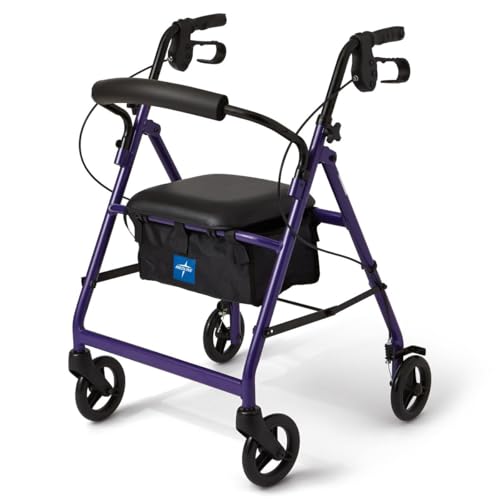
A gait belt works alongside other mobility aids rather than replacing them. Many people who use a gait belt during transfers also use a rollator walker for independent walking once they are standing. The rollator gives the person a stable support structure to walk on their own, while the gait belt is used by the caregiver during the more demanding sit-to-stand and stand-to-sit transfers.
If your loved one needs both a gait belt and a rollator walker, both may be available through your plan's OTC catalog or DME benefit. Ask your plan about both items at the same time to streamline the process.
Official Medicare Resources