
Stroke recovery involves a range of Medicare Advantage benefits that extend well beyond the hospital stay. Your plan typically covers durable medical equipment for mobility and daily living, home health visits for physical therapy, occupational therapy, and speech therapy, and home safety modifications to reduce fall risk. Many stroke survivors and their families do not know how broad these benefits are or how to access them. This guide explains what is covered and how to make sure you receive everything you are entitled to.
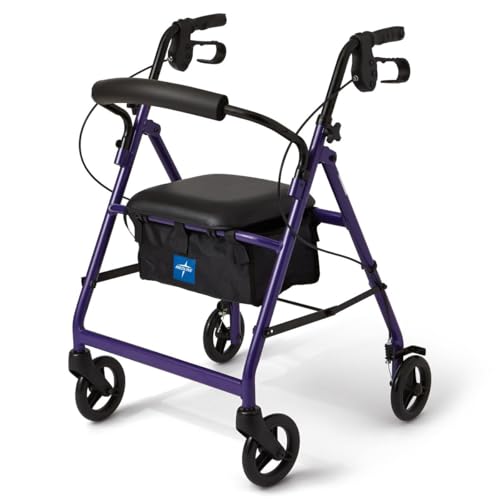
Medline Rollator Walker
$65-120 · Often covered under DME benefit
Durable Medical Equipment Covered After Stroke
Medicare Advantage covers durable medical equipment prescribed by your doctor as medically necessary. After a stroke, the following items are commonly ordered based on the type and severity of impairments:
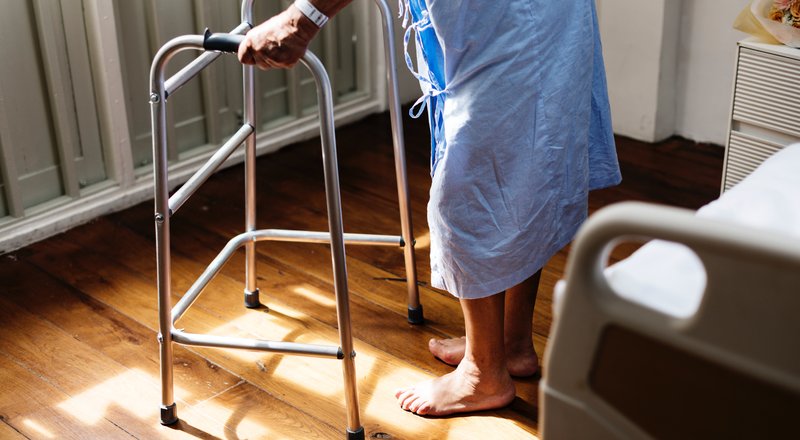
- Rollator walker: For stroke survivors who have weakness on one side (hemiparesis) but can bear weight on both legs, a rollator walker with four wheels provides stable support while allowing a more natural gait pattern than a standard walker.
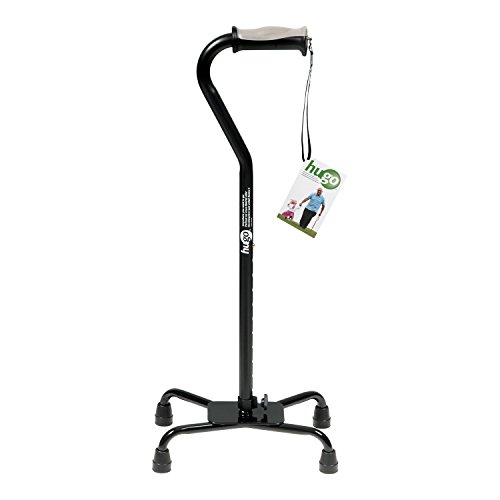
- Quad cane: A quad cane has a four-point base that provides more stability than a standard cane. It is often used when a walker is no longer needed but walking without support is not yet safe. The extra base contact with the floor helps compensate for balance deficits common after stroke.
- Wheelchair: If the stroke has significantly affected mobility, a manual or power wheelchair may be ordered. Coverage depends on medical necessity and your plan's prior authorization process.
- Hospital bed or bed rail: If mobility in bed is significantly impaired, a hospital-style adjustable bed or a bed rail to assist with repositioning may be covered.
- Adaptive equipment for one-sided weakness: Stroke survivors with weakness on one side (hemiplegia or hemiparesis) often need tools that can be used with one hand. An occupational therapist can prescribe items such as button hooks, dressing aids, one-handed cutting boards, and reacher tools. Some of these may be covered through DME; others may be available through your plan's OTC (Over-the-Counter) benefit.
Home Health: Physical Therapy, Occupational Therapy, and Speech Therapy
This is one of the most valuable sets of benefits after stroke, and all three therapy types can be delivered in your home when you qualify as homebound. Homebound status means that leaving home takes a considerable and taxing effort, which is common after stroke. Medicare Advantage covers:
- Physical therapy (PT): PT focuses on strength, balance, coordination, and gait. After stroke, PT helps you regain the ability to walk safely and move around your home. Visits are typically two to three times per week.
- Occupational therapy (OT): OT helps you relearn how to do daily activities such as dressing, bathing, cooking, and using the phone. OT is especially important for stroke survivors with weakness on one side, since many daily tasks require adapting technique or using adaptive tools.
- Speech therapy: Speech-language pathologists treat both communication problems (aphasia, difficulty finding words, or understanding speech) and swallowing problems (dysphagia). Dysphagia is a common and serious complication of stroke that increases the risk of aspiration pneumonia. Speech therapy at home or at an outpatient clinic is covered by Medicare Advantage when medically necessary.
Home health visits continue as long as you are homebound and showing measurable progress in your recovery. Your plan requires prior authorization. Ask the hospital discharge team to coordinate authorization before you leave so there is no gap in care.
Home Safety Modifications
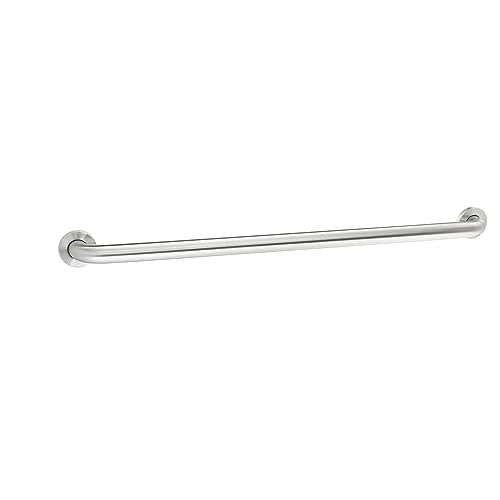
Many Medicare Advantage plans include a home safety or home modification benefit that covers grab bar installation, threshold ramps, stair handrails, and other changes to reduce fall risk. Falls are a serious concern for stroke survivors because balance and coordination are often impaired. Even a modest home safety benefit can pay for a grab bar next to the toilet, a grab bar in the shower, and a ramp over a threshold step. Call your plan's Member Services to ask whether this benefit is included and how to access it. Some plans require a home safety assessment by an occupational therapist to activate the benefit.
Adaptive Equipment for One-Sided Weakness
Stroke survivors dealing with hemiplegia (paralysis on one side) or hemiparesis (weakness on one side) often benefit from adaptive tools that make daily tasks possible with one hand. An occupational therapist working with you at home can evaluate your specific needs and recommend the right tools. Common adaptive equipment includes:
- Dressing aids: button hooks, zipper pulls, elastic shoelaces
- Reachers to pick up items from the floor or high shelves
- One-handed can openers and jar openers
- Plate guards and suction-cup bowl holders to keep dishes from sliding
- Non-slip mats for the kitchen and bathroom
Some of these items may be covered through your plan's DME benefit with an OT prescription. Others may appear on your plan's OTC benefit approved item list. Ask your OT and your plan's Member Services what is available to you.
Speech Therapy for Aphasia and Swallowing
Aphasia, the difficulty understanding or producing language after stroke, affects about one-third of stroke survivors, according to the NIH. Speech therapy for aphasia can help you rebuild communication over weeks, months, and even years after the stroke. Do not assume that therapy should stop if progress feels slow. Significant improvement can occur long after discharge from the hospital. Coverage continues as long as there is measurable progress. If your plan denies continued speech therapy coverage, you have the right to appeal the decision.
Swallowing problems (dysphagia) are also common after stroke and require evaluation by a speech-language pathologist. If you or your family member had a swallowing evaluation in the hospital, follow-up at home or as an outpatient is important, especially if a modified diet texture is still required.
How Long Does Home Health Coverage Last?
Medicare Advantage home health benefits continue as long as you remain homebound and your therapists document measurable improvement with each visit. There is no fixed number of visits written into the law. What matters is whether you are making progress. If you or a family member feels that services are being cut off too soon, you have the right to request a written denial and appeal the decision through your plan's grievance process. Ask your plan's Member Services for information on how to file an appeal.
Caregiver Support Programs
Some Medicare Advantage plans offer caregiver support programs as an additional benefit. These programs may include respite care (temporary relief for the primary caregiver), caregiver training and education, and connections to community resources. If you are caring for a stroke survivor at home, ask your plan whether a caregiver support program is available. The physical and emotional demands of stroke caregiving are significant, and these programs exist to help families navigate recovery together.
What to Do If Benefits Were Not Coordinated at Discharge
If your loved one came home from the hospital or rehabilitation facility without home health services starting, without equipment delivered, or without a plan for follow-up therapy, call your Medicare Advantage plan's Member Services right away. Explain the situation clearly: the date of discharge, what was not arranged, and what is needed. Ask for expedited processing given the medical circumstances. You can also call the discharging hospital's social work or case management department to ask for their help resolving the gap. Do not wait. Early, consistent therapy after stroke produces better outcomes. Every day without services is a day of potential recovery time lost.
Official Medicare Resources